Description
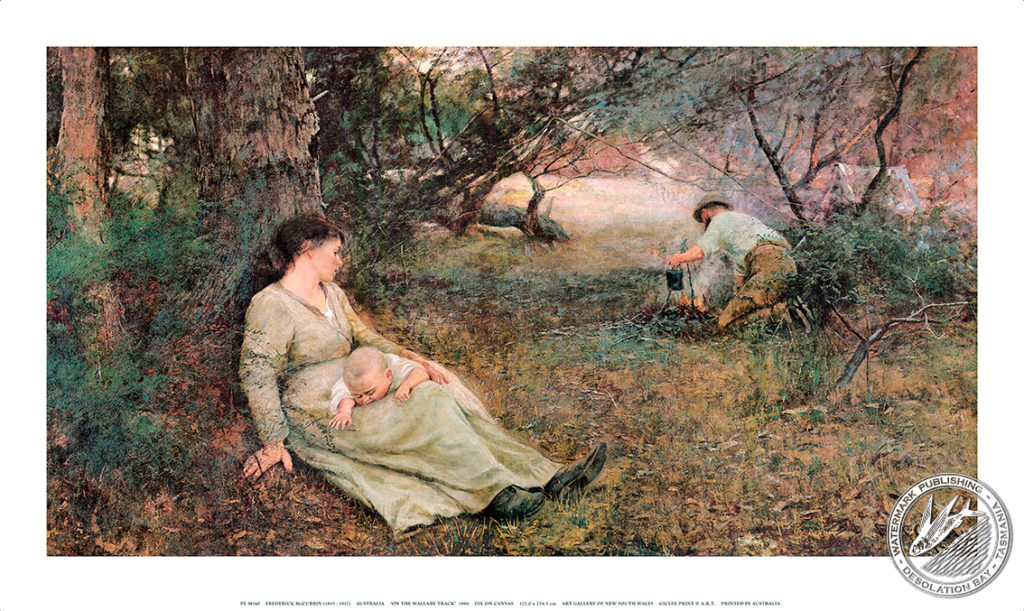
On the Wallaby Track (1896) by Frederick McCubbin is an important work of the Heidelberg School, capturing the essence of the Australian bush and the struggles faced by those living in the remote outback. The painting is a powerful reflection of the challenges and isolation experienced by settlers during Australia’s colonial era, with McCubbin using the landscape as a backdrop to explore themes of hardship, resilience, and the relationship between people and the land.
In this painting, McCubbin depicts a pioneer couple’s camp, in a shady grove. The man has lit a fire and is boiling a billy, while the woman rests against a tree, nursing her infant child.
The title, On the Wallaby Track, refers to the traditional route used by Australian bushmen to drive cattle or to travel through the bush. The “wallaby” refers to the indigenous marsupials that inhabit the area, and the term wallaby track evokes the rugged, untamed nature of the outback. McCubbin’s evocative brushwork and naturalistic approach to light and shadow emphasize the vastness of the landscape and the solitude of the figures within it.
The emotional depth of the painting comes from its focus on the solitary, wearying journey of the figures, reflecting broader themes of perseverance, and the quiet dignity of those who worked to tame the land. On the Wallaby Track not only showcases McCubbin’s technical skill but also encapsulates the spirit of Australia’s pioneering era, capturing the resilience and hardship that shaped the nation’s identity.
Fun fact, this image was used in animated form as an advertisement for Nestle’s Kit Kat chocolate bars in the 1980’s in Australia, which grew it’s popularity. It was also used on the Australian $2 postage stamp in 1981.